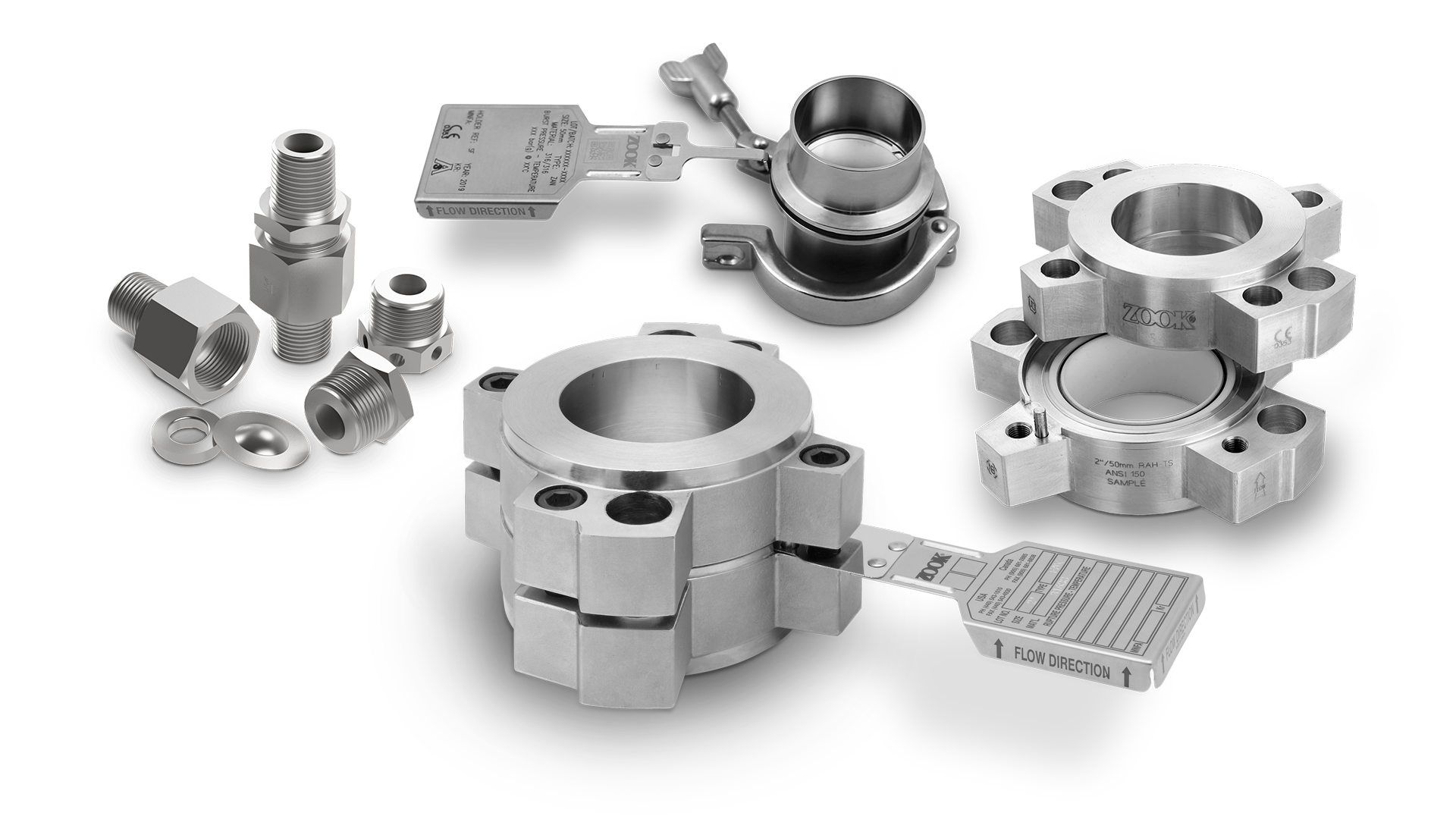
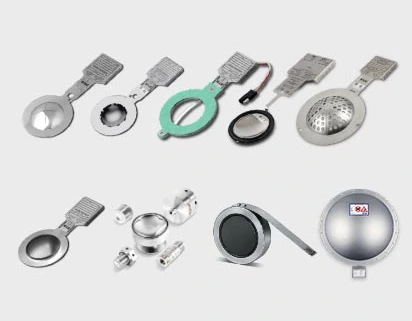










In many facilities, rupture disk holders remain in service for years with limited scrutiny. Yet wear, corrosion, distortion, installation damage, and legacy design limitations can all compromise pressure-relief performance. When holder condition is overlooked, the consequences may include leakage, burst-pressure variability, unplanned shutdowns, compliance exposure, and avoidable safety risk. This paper provides practical guidance to help maintenance, reliability, and process safety teams better understand holder condition, inspection priorities, replacement triggers, and the design features that reduce installation-related error.
TECHNICAL PAPER
Are Your Rupture Disk Holders Still Fit for Service?
Rupture disk holders are often treated as permanent components, but their condition can have a major impact on burst accuracy, leak tightness, compliance, uptime and safety. This technical paper explains what to inspect, when to replace, and how modern holder designs help reduce risk.
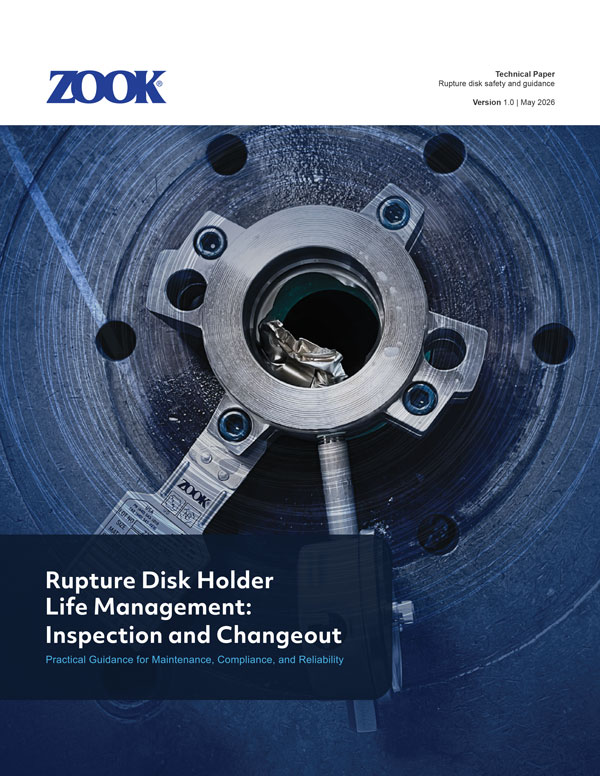
What you’ll learn:
- Why rupture disk holder condition is critical to burst performance and leak tightness
- How wear, corrosion, distortion, and installation damage can affect safety, compliance, and uptime
- What practical inspection criteria can help determine whether a holder remains fit for service
- When holder replacement should be considered as part of a proactive maintenance strategy
- How modern holder designs reduce installation risk compared with legacy technologies
Who should read this paper: Maintenance and reliability professionals, process safety engineers, plant managers, turnaround teams, plant inspectors and anyone responsible for rupture disk inspection, replacement, or pressure-relief system integrity.
Why it matters: In pressure-relief applications, small deviations in holder condition can create outsized operational consequences. A degraded holder can undermine the performance of the rupture disk it supports, increasing the likelihood of leakage, premature activation, delayed opening, or inconsistent burst behavior. Better holder life management supports safer operation, stronger compliance, and more reliable plant performance.