












WHAT IS THE SHELF LIFE OF A RUPTURE DISK?
We hear many of our clients ask this important question.
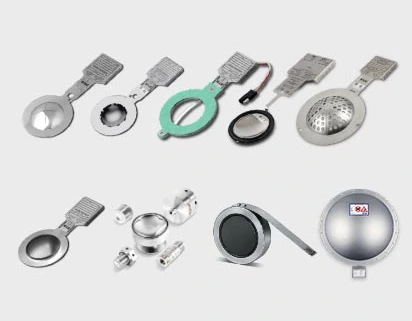
Generally speaking, rupture disks are corrosion-resistant by nature and have an indefinite shelf life.
ZOOK has performed testing on disks held in our long-term stock, which validates that consistency of performance is maintained over decades of storage.
This does not mean that good storage practice should not be followed and there are some guidelines to consider:
- Rupture disks should be stored in controlled, covered conditions, avoiding extremes of temperature and humidity.
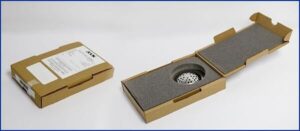
- Rupture disks are usually individually shipped in purpose-designed boxes. Best practice is to leave them in that box until needed. The box provides some protection against environmental conditions and physical damage to the disk from nearby parts and careless handling.
- Handle with care. Some rupture disks look robust and appear to be capable of withstanding handling and stacked storage. A rupture disk is a precision instrument and can be more easily damaged than it appears. If disks are removed from their boxes for inspection prior to storage, they should always be handled by the perimeter rather than touching any part of the membrane. The disk should never be rested on its dome or membrane. Improper handling could cause unseen damage that will critically affect the performance of the disk once in service.
- Some rupture disks utilize plastic film liners or seals. These liners could be for protection of the disk from corrosive media or may be integral to proper sealing and function. Be careful not to mistake these plastic film seals and liners for transport protection, unless clearly labelled otherwise they should not be removed.
- If in doubt, ZOOK installation instructions provide guidance on proper handling. You can see these here.
- Consideration might be given to disks fitted with integral elastomer gaskets, where the volatiles in the elastomer will gradually be released. This process will take a long time to significantly affect the elastomer’s performance but may need monitoring in critical applications, for example pharma and sanitary processes.
Conclusion
If a rupture disk is stored and protected properly, it will have an indefinite shelf life.
Have questions about the performance of your rupture disk or application? Get a free consultation by clicking the button below.
No Cost Consultation